
Starting an adult self-defense class is a strong decision. You are making time to learn useful skills, move with more confidence, and become harder to surprise under pressure.
But good intentions do not automatically become useful training. The way you practise matters. Small habits can keep a student busy without making them more prepared.
Here are seven common mistakes adults make with self-defense classes, along with practical ways to correct them.
1. Treating training like a one-time event
One class can be valuable, but self-defense is not information you collect once and then keep forever. A single seminar may introduce an idea. It cannot build timing, balance, decision-making, or the calm required to use that idea when your heart rate rises.
Adults sometimes attend one class, leave feeling motivated, and wait for the next burst of motivation before returning. Meanwhile, the skill fades. The problem is not a lack of interest. It is a training rhythm that never gets established.
Fix it
Choose a schedule you can repeat. One consistent class each week is more useful than an occasional intense session. Treat attendance like any other important appointment, then let repetition do its work. Your goal is not to have one impressive night. Your goal is to become a little more capable every month.
2. Focussing on a single favourite technique
It is natural to have a favourite movement. Maybe one technique feels powerful, familiar, or easy to remember. The trap is trying to force that technique into every situation.
Real encounters do not arrive in a clean sequence. Distance changes. The surface under your feet changes. The other person may be bigger, faster, or behaving in a way you did not expect. A technique is only useful when you can recognize when it fits, and when you can move to another option when it does not.
Fix it
Train principles before collecting techniques. Work on posture, distance, balance, frames, leverage, movement, and getting to safety. Ask what the technique is teaching you, not just whether it worked in the drill. Build a small set of connected responses so you can adapt instead of freezing when the first choice is unavailable.
3. Skipping awareness and verbal boundaries
Self-defense does not begin when someone grabs you. It begins when you notice a change, trust useful information, set a boundary, and decide where you can move.
Students who only want physical techniques can miss some of the most important parts of the skill. A clear “No.” A step toward a public area. Calling someone you trust. Leaving before a situation becomes physical. These are not lesser responses. They are often the safest ones.
Fix it
Practise the whole sequence: notice, decide, communicate, create space, and get help. Use short phrases you can say clearly without apologizing for having a boundary. During training, ask your instructor how awareness and verbal skills connect to the physical work. The best outcome is the one that keeps you safe and lets you leave.
4. Practising only in perfect conditions
Many drills begin with cooperative partners, clean mats, bright rooms, and plenty of space. That is useful for learning a movement. It is not the only condition you need to understand.
If every repetition is perfect, your brain may learn to wait for perfect conditions. Real life can include a wall, a chair, poor footing, low visibility, a winter coat, a bag, or a partner who does not move exactly as expected. You do not need to turn every class into chaos, but you do need to learn how a skill changes when the context changes.
Fix it
First make the movement safe and clear. Then add small, controlled variables: a different angle, a little less space, a verbal distraction, or a decision between two options. Ask your instructor to keep the exercise appropriate for your experience. Pressure should be introduced gradually so you learn to think, not just react wildly.
5. Starting without clear goals
“I want to learn self-defense” is a good reason to begin, but it is too broad to guide your next month of training. Your goal might be to feel safer walking to your car, learn how to protect a family member, improve your fitness, manage stress, or build confidence after a difficult experience.
Without a clear goal, it is easy to judge progress by the wrong measure. You may focus on how advanced someone else looks instead of noticing that you are moving with better balance, speaking more clearly, or staying calmer during a difficult drill.
Fix it
Write down one or two practical outcomes. Tell your instructor what you want from training and revisit the goal after a few weeks. Measure progress in behaviors you can control: showing up, asking questions, recovering after mistakes, moving safely, and making better decisions under pressure.
6. Relying on strength instead of technique
Strength can help, but it is not a complete self-defense plan. When a student relies on force, a technique may work with a cooperative partner and disappear when the student is tired or the other person is stronger.
Leverage, structure, timing, position, and efficient movement give you more options than effort alone. They also make training more sustainable. A good adult class should help you understand how to use your body intelligently, not ask you to win every exchange through exhaustion.
Fix it
When a technique fails, do not immediately add more strength. Check your base, distance, alignment, grip, timing, and breathing. Slow the movement down and find the point where your structure is lost. Then practise using only the amount of effort you need. Strength is a useful quality. Technique is what lets you use it responsibly.
7. Choosing a class that does not match your goals
Not every martial arts class teaches the same thing. A sport-focused class, a traditional Jiu-Jitsu class, a fitness class, a competition team, and a practical self-defense program may all be worthwhile. They still have different purposes.
The wrong fit can make training feel frustrating. You may want practical awareness and controlled scenarios but find that every session is built around competition rules. Or you may want a hard athletic challenge and choose a class whose pace does not meet you there. Neither choice makes the class bad. It just may not be the right tool for your goal.
Fix it
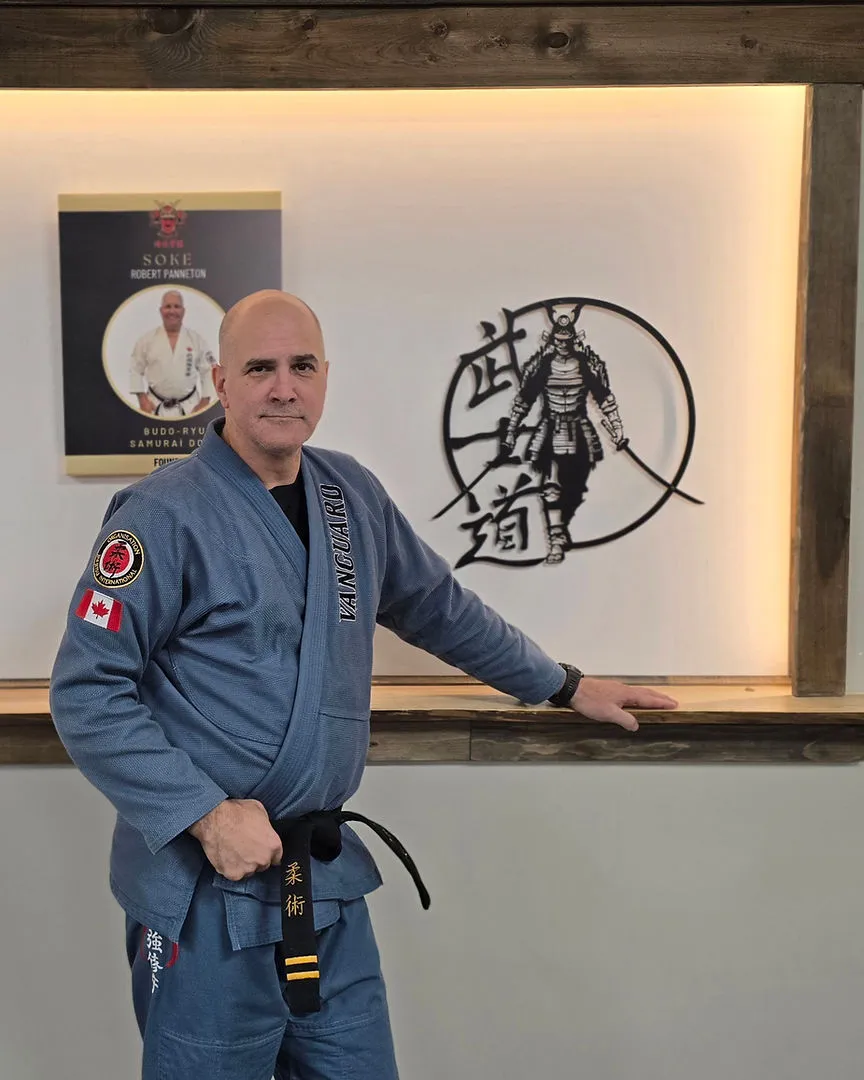
Ask direct questions before you commit. Who is the class for? What does a typical session include? How are beginners supported? How is safety handled? Does the instructor teach awareness, verbal boundaries, movement, and physical skills? At Vanguard, traditional Japanese Jiu-Jitsu and Budo principles are blended with modern, reality-based self-defense in a supportive, no-ego room.
The better way to train
Adult self-defense training works best when it is regular, adaptable, and connected to your real life. Show up consistently. Learn principles instead of chasing one favourite move. Practise awareness and communication alongside physical skills. Add pressure gradually. Know what you are working toward, and choose a class whose purpose matches it.
You do not need to be athletic, fearless, or experienced to start. You need a clear first step and a room where good coaching makes progress possible.
Book a free intro session at Vanguard Self-Defense Academy in Chesterville and bring your questions. You can see the dojo, meet the instructor, and learn whether the training fits what you want to build.Train with purpose. Build calm confidence. Protect what matters.